This project was conducted as part of CIS 605: Cultural and Critical Theory in Communication at the University of Alabama. On this page, I describe the nature of my scholarship, identify the central questions and concerns that animate my work, and explain how my research interests are developing within communication, media psychology, and related fields.
What Is My Research?
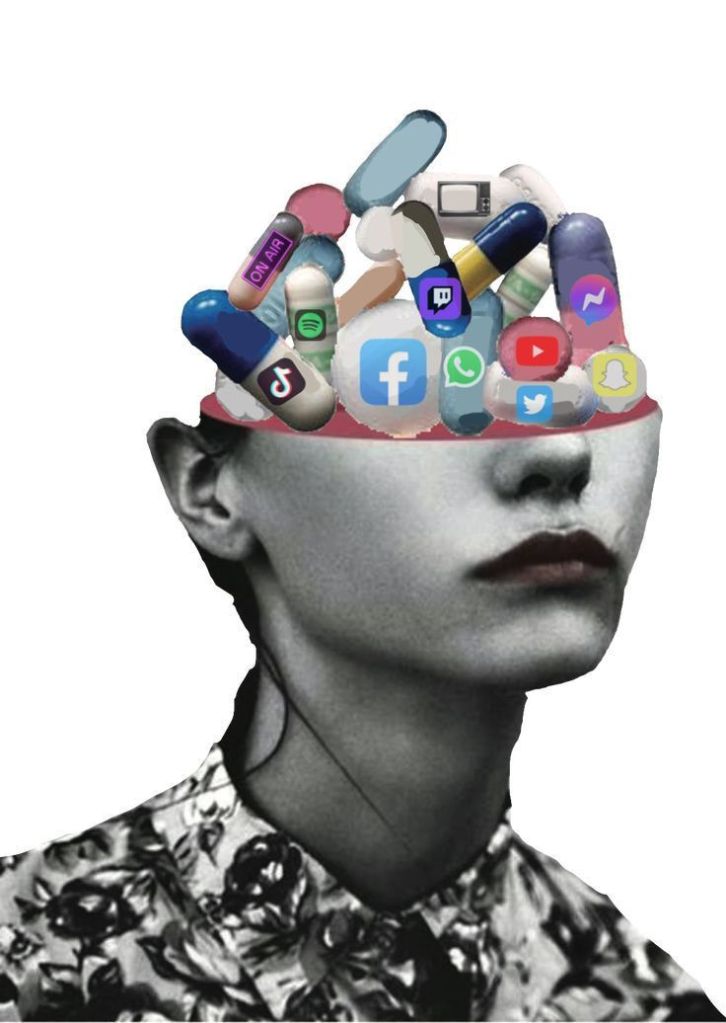
My research is built around the concept of Social Media-Induced Self-Fragmentation (SMSF): the process by which sustained engagement with contemporary social media platforms erodes users’ sense of a coherent, unified self. Three platform affordances forms the core of my theoretical model. Algorithms that decides which version of a user’s content receives the most engagement; quantified feedback mechanisms (likes, shares, follower counts, view metrics) translate into numerical data visible to oneself and to lastly, context collapse. The result is a user who must simultaneously manage incompatible versions of themselves without the social scaffolding that ordinary interactions provide. To make sense of these dynamics, I draw on self-psychology as my primary theoretical lens. Kohut (1971, 1977) described the self as a dynamic process requires others to maintain cohesion. When those relational structures are unreliable, the self may become fragmented. Arnd-Caddigan’s work on digital identity examined how the “always-on” quality of networked life pulls users toward a kind of self that is perpetually performed for external audiences, never fully integrated, and increasingly alienated from its own inner life.
Why Is It Important?
The urgency of my research is based on a public health reality that has become impossible to ignore. Over the past decade, rates of depression, anxiety, and loneliness among adolescents and young adults in the United States have increased sharply, with the steepest rises occurring precisely during the period of widespread smartphone and social media adoption. Twenge (2017), drawing on nationally representative survey data collected from over eleven million young people, documented that teens born after 1995, the first generation to spend their entire adolescence with social media, experienced unprecedented declines in psychological well-being, with rates of depression and suicide ideation rising most sharply among girls and young women. Primack et al. (2017) found in a nationally representative study of U.S. young adults that use of multiple social media platforms was independently associated with significantly elevated odds of depression and anxiety symptoms. Importantly, this study found a dose-response relationship: those using seven to eleven platforms had more than three times the odds of depression and anxiety compared to those using two or fewer, an indication that the fragmented, multi-platform quality of contemporary social media engagement is a meaningful risk factor. Hence, the need for my area of research.
 My Mediaverse: A Glimpse of My Work